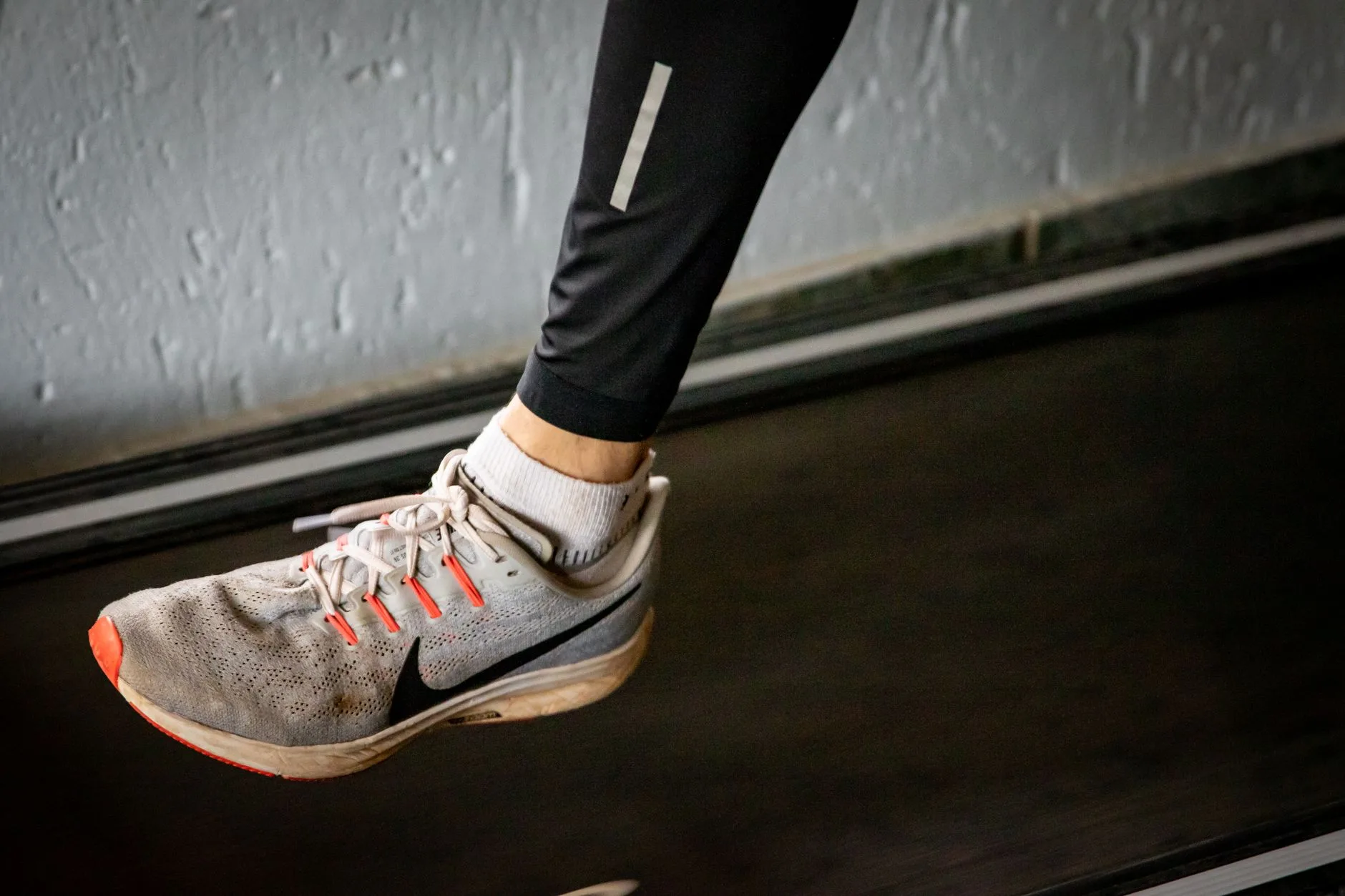
Photo by Magda Ehlers on Pexels
You’ve bought shoes online before — your usual street size, the colour you liked, done in two minutes. Then three weeks later you’re nursing a black toenail, or your heel’s been slipping all run and you’ve got a hot spot the size of a 50p coin. Running shoes don’t work like everyday shoes. The fit tolerances are smaller, the consequences of getting it wrong are bigger, and almost nobody gets taught how to actually check fit properly — they just get told a size and go with it.
This isn’t about finding “the best shoe.” It’s about finding the shoe that fits your actual foot, your actual gait, and the actual runs you’re doing. A £160 shoe that fits badly will hurt you faster than a £70 shoe that fits well. Fit beats hype every time, and most of what goes wrong with running shoes is fit-related, not shoe-quality-related.
Below is the process — the checks, the numbers, and the mistakes that send people back to the shop three months later convinced they “just have problem feet.” Most of the time, they don’t. They just never checked properly.
Get measured properly — and not just for length
Go to a proper running shop (not a general sports shop) and get both feet measured, standing, at the end of the day when your feet are slightly swollen — which is close to how they’ll feel mid-run. Measure both feet separately. Most people have one foot that’s slightly longer or wider than the other, and you should always fit to the bigger foot.
You need three numbers, not one:
- Length — from heel to the tip of your longest toe (often the second toe, not the big toe)
- Width — across the ball of your foot, the widest part
- Arch height — flat, medium, or high, which affects how a shoe should flex and support
Most running shops will do this with a Brannock device or a foot-scanning mat in under five minutes, free, with no obligation to buy. If a shop won’t measure your foot before selling you a shoe, that’s a sign to leave.
The thumb’s-width rule for length
This is the single most common fit mistake: buying running shoes in your normal street size. Feet swell during a run — more over longer distances, more in heat — and they need room to move forward slightly on every downhill step and every long run. Too tight at the toe box and you get black toenails, bruised nails, and toe blisters. Too loose and your foot slides inside the shoe, which causes its own blisters from friction.
The standard check: with the shoe laced and your foot pushed forward so your toes touch the front, you should be able to fit roughly a thumb’s width — about 1 to 1.5cm — between your heel and the back of the shoe. In practice, this usually means going half a size up from your normal street shoe, sometimes a full size for marathon and ultra distances where swelling is more pronounced.
| Street shoe size (UK) | Typical running shoe size needed |
|---|---|
| 6 | 6.5 |
| 7 | 7.5 |
| 8 | 8.5 or 9 |
| 9 | 9.5 or 10 |
| 10 | 10.5 or 11 |
This is a rough guide, not gospel — brands vary. Which is exactly why you try the shoe on rather than order by size alone.
Width matters as much as length (and it’s the one people skip)
A shoe can be the right length and still be wrong — too narrow across the ball of your foot, squeezing your little toe, or too wide, letting your foot slide side to side on turns. Most major brands offer at least two widths (standard and wide, sometimes narrow too), but they’re rarely stocked in every shop, so you may need to order in or try a specialist retailer.
Signs your shoe is too narrow: numbness or tingling in your toes after 20–30 minutes, a burning sensation across the forefoot, or visible bulging of the upper fabric at the widest point of your foot. Signs it’s too wide: your foot shifts inside the shoe when you change direction, and you find yourself tightening the laces more and more just to stop the slide.
If you have a noticeably wide or narrow forefoot, start your search by filtering for width options rather than hoping your preferred brand happens to fit — this is one of the few genuinely useful filters when shopping for beginner-friendly options, covered in more depth in our guide to the best running shoes for beginners in the UK.
Heel lock, not heel squeeze
The heel of a running shoe should feel snug without feeling clamped. Lace the shoe fully, walk around the shop for a couple of minutes, then try this: without unlacing, try to lift your heel out of the shoe while keeping your foot flat. A small amount of movement — a few millimetres — is normal. If your heel lifts clean out, or slides up and down with every step, that’s heel slip, and it will give you blisters on the back of your heel within a few kilometres, not a few runs.
If you’re getting consistent heel slip in a shoe that otherwise fits well through the midfoot and toe box, try a runner’s loop (also called a heel lock lacing technique) before giving up on the shoe entirely — it solves this in a lot of cases without needing a different model.
Try them on the way you’ll actually run in them
Don’t just stand in the shoe and nod. Walk. Jog on the spot. If the shop has a treadmill, use it — most running-specific shops do, and this is the single most useful five minutes of the whole process. Bring the socks you actually run in, because sock thickness changes fit meaningfully. Try shoes in the afternoon or evening if you can, when your feet have had a full day to swell slightly.
Pay attention to:
- Any rubbing at the back of the heel or sides of the toe box after a few minutes of movement
- Whether your foot feels like it’s sliding forward on the treadmill decline, if there is one
- Whether the arch of the shoe matches the arch of your foot — a mismatch here is a common cause of arch pain in the first few weeks of a new shoe
If you have flat feet or high arches, generic “comfortable” isn’t enough — read our specific guides on running shoes for high arches or running shoes for overpronation before you commit, because the wrong arch support can cause problems that only show up after week three or four, once the mileage builds.
Fit changes with the job the shoe is doing
A shoe that fits for easy 5k runs around the park might not fit the same way once you’re doing a 20km long run or racing a half marathon. Longer runs mean more swelling, more fatigue-related changes in your stride, and more time for a small fit issue to become a big blister. If you’re training for something specific, it’s worth matching your shoe fit check to that distance and effort, not just a quick jog around the shop.
| Use case | Fit priority | Typical extra room needed |
|---|---|---|
| 5K / easy runs | Snug, responsive feel | Standard thumb’s width |
| 10K / tempo runs | Secure midfoot, slight toe room | Standard thumb’s width |
| Half marathon training | More toe room for swelling | 1.5cm at toe |
| Marathon / long runs | Maximum toe room, wide option if borderline | 1.5–2cm at toe |
If you’re building towards a longer race, it’s worth reading up on the specific demands first — our guide to the best running shoes for half marathon training covers how cushioning and fit priorities shift as the distance goes up.
Don’t ignore your socks and insoles
Fit isn’t just the shoe — it’s the shoe plus everything inside it. Thick cushioned socks can turn a perfect fit into a tight one. Aftermarket insoles can change volume inside the shoe enough to affect heel lock. If you’re planning to run in specific socks or add insoles, bring them (or equivalents) to the shop when you’re testing fit, not after you’ve bought the shoes.
This matters more than people expect — a huge number of returned running shoes aren’t actually the wrong shoe, they’re the right shoe paired with the wrong sock thickness. If blisters have been a recurring issue regardless of shoe, it’s worth separately checking our guide on best running socks to prevent blisters alongside your shoe fit, because the two problems often get confused for each other.
The Honest Takeaway
- Get both feet measured for length, width, and arch at a proper running shop — not a general sportswear chain — ideally in the afternoon when feet are slightly swollen.
- Go half a size up from your street shoe as a starting point, and check for a thumb’s width of space at the toe when your foot is pushed forward in the shoe.
- Walk or jog in the shoe before buying — standing still tells you almost nothing about how it’ll perform at kilometre 8.
- If you get consistent heel slip in a shoe you otherwise like, try a heel lock lacing technique before writing the shoe off.
- Re-check fit when your training distance changes significantly — what fits for 5k easy runs may need more room once you’re doing long runs past 15km.
Next read: Best running shoes for beginners UK: how to choose the right pair